
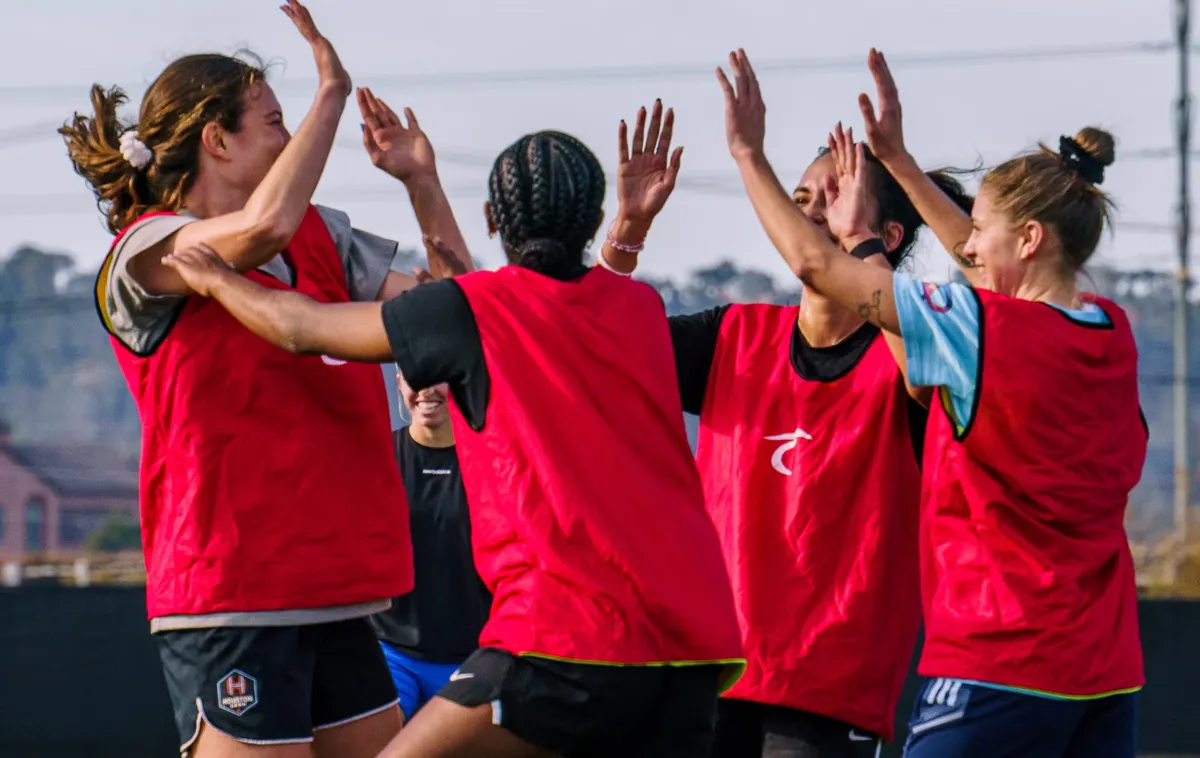
Athletes are starting (I'd say continuing) to design mental health infrastructure themselves — not just participate in programs run by clubs or leagues.
‘I’m walking away better’: the mental health retreat helping top footballers
Brainchild of the US defender Naomi Girma is addressing the toxic culture that has affected many in the women’s game there
 Suzanne Wrack
The signal (what's happening)
- NWSL/USWNT defender Naomi Girma helped create an athlete-led mental health retreat, Create the Space.
- 2024: 20 x NWSL players (one per club) and 25 youth coaches/managers attended in San Diego.
- The intent is culture change: building “safe” environments where mental performance and sport performance can coexist.
- The initiative is tied to loss and accountability: Girma links it to Katie Meyer’s death (suicide, 2022) and a desire to intervene earlier.
- Participants describe leaving “better, more equipped and lighter”, with plans to carry the work back into clubs and communities.
This signals a possible shift from: institutional control of athlete mental health infrastructure to: athlete ownership of mental health as both peer support and commercial expertise
So what for the AFLPA?
- If players attend AFLPA mental health programs then build businesses selling similar services, who owns the expertise? Does this strengthen player-driven mental health infrastructure or create conflicts between collective support and individual profit?
- Should player mental health businesses be viewed as competitors or the most credible providers? Does commercialising 'mental fitness' fragment AFLPA advocacy or prove players are best positioned to deliver wellbeing services?
- Could the AFLPA incubate player mental health businesses without undermining free collective support? Is there a model where the AFLPA partners with player ventures, turning wellbeing expertise into post-career income while maintaining peer support?
- Role clarity: If athlete-led wellbeing spaces grow, what is the AFLPA’s role — provider, partner, funder, or standard-setter (duty of care, safeguarding, referral pathways)?
- Culture as the unit of change: This signal pulls coaches and team environments into the centre of wellbeing. How much of AFLPA’s wellbeing agenda needs to target workplace culture and leadership practices, not just individual support?
- Proof vs promise: This is one early example, not outcome evidence. What would AFLPA want measured over time (psych safety, help-seeking, incident reporting, return-to-play pressures) before scaling or endorsing similar models?